

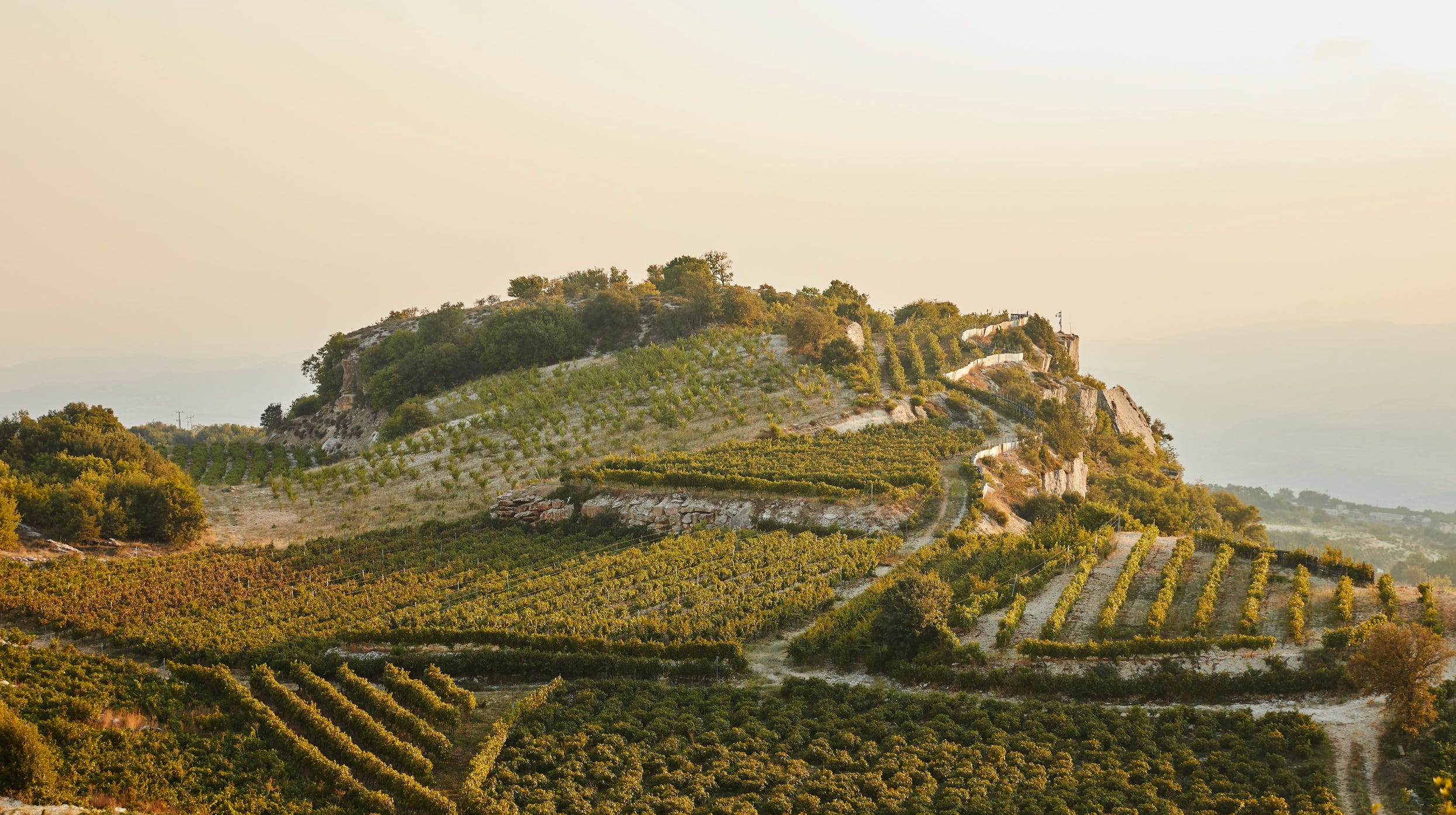
Wine has been made in Cyprus for almost 6,000 years, which makes it one of the oldest winegrowing regions in the world. You’d think that would make wines from this Mediterranean island well-known and widely available, but that’s not the case. You’d be hard pressed to find a bottle in your local wine merchant, and I’d bet the bougiest bottle in my collection that, before reading this, you wouldn’t have been able to name its two most planted varieties: Xynisteri and Mavro. In the words of Joe Marler, Cyprus is not one of the wine world’s big dogs. But, with the help of importers like Maltby & Greek, Bancroft, and Amathus, this is slowly changing. Earlier this week, I went to the High Commission of Cyprus in London to learn about the region and to taste some of its best wines. Here’s what I discovered…
A potted history
Archaeological evidence suggests that people have been making wine in Cyprus since the Neolithic period, but it wasn’t until the Middle Ages that it began to gain an international reputation. The island’s location made it a useful Medieval port for voyages from Greece and Italy to Egypt and the Levant, and its wines were transported all over the world, predominantly to Southern Europe. When the Knights of St. John of Jerusalem (a Catholic military order that fought in the Crusades) arrived in the late 13th Century, they reorganised land ownership into commanderies, or districts overseen by a commander. The Grand Commandery was where the knights lived, and it also happened to be where the majority of the island’s vineyards were located. Here, the knights took over production of the island’s local sweet wine, renamed it “Commandaria” and made it the most sought-after wine in Europe. It is still Cyprus’s most famous wine today.
Fast-forward a couple of hundred years and, in the late 16th century, the Ottomans took over and put a stop to winemaking until, in the 1870s, the British Empire claimed the island and replanted its lost vineyards to make a rip-off of Sherry that they imaginatively named… Cyprus Sherry.
After the Second World War, Cyprus spent many years focussing on bulk wine until, according to Jancis Robinson, ‘President Gorbachev’s attempt to sober up his nation and the fall of communism had the indirect effect of waking up the Cypriot wine industry from its long slumber.’ Now, a new generation of Cypriot winemakers is championing local varieties and experimenting with different winemaking styles and ageing techniques. If you love high-altitude wines and discovering new grape varieties, Cyprus is the place for you.
Climate and geography
Cyprus benefits from a warm, dry Mediterranean climate that’s ideal for grape growing, although water stress can be a problem. Amazingly, phylloxera never made it to the island, so all vines are un-grafted and the majority are also dry farmed bush vines. Most vineyards are located on the slopes of the Troodos Mountains at elevations of 500-1,500m, and terraces are commonly used on steeper slopes, making for some truly stunning landscapes. Soils include volcanic, limestone, clay and crystal gypsum.
Cyprus’s climate is very well suited to sustainable production. However, according to the producers I spoke to at the tasting, many work without chemicals but choose not to certify, so it can be hard to know who’s sustainable and who’s not.
My top wines from the Wines of Cyprus tasting
Although Cyprus makes some very good wines from international varieties, I was on the lookout for interesting examples from the island’s local grapes. Here are some of my favourite producers and wines from the day:
Zambartas Winery — organic


Zambaratas is a boutique, family-owned winery that was founded in 2006 by Akis Zambaratas, and which is now run by his son Marcos and his wife Marleen. Based in the island’s oldest wine region, Krasochoria Lemesou, the winery manages 25ha of vineyards planted at 550-1000m altitude. They farm according to organic principles (two vineyards are certified, the remaining 3.6ha are ‘in the certification process’) and they do not irrigate once vines are established.
Single vineyard Xynisteri, 2024, 12.5%. The Wine Tasting Shop, £34 (organic certified)
This 100% Xynisteri was vinified using indigenous yeast in small oak and acacia barrels, followed by six months of ageing on the lees. Time in barrel made this strikingly different from the fresher examples of Xynisteri offered by other producers at the tasting. It was smoky with aromas of lemon, apple, pear, dried meadow grasses, and marzipan. On the palate it’s full of mouthwatering green apple, ripe pear, apricot, honey, acacia blossom, and hay.
Promara, 2024, 13.5%. Maltby & Greek, £20
Promara is an ancient and rare grape – and I loved it. At Zambartas, they ferment 50% in stainless steel and 50% in old oak barrels to add body and texture. On the nose it blends ripe stone fruit and melon with a great big zippy dash of lime that’s as joyful and unexpected as the cold shock of sea dip in winter. When you taste it, it’s all apricots, nectarine, and melon, but then there’s tart green apple, fresh lime, and salt. Love, love, love.
Maratheftiko 2023, 15%
Maratheftiko is Cyprus’s premium red grape, and it’s known for being robust and tannic. This one has been softened by 12 months in French oak and it’s very fun, if a little high in alcohol. On the nose it’s exuberant with bright aromas of blueberry and blueberry muffin made serious by scents of black cherry and violet. On the palate it’s all blueberry tart, sweet red fruits, blackcurrant and dusky florals with well-integrated tannins and a super long finish. I love how it blends pop-tart sweet-fruitiness with grown-up floral notes, and was really impressed with how fresh it was despite the high (yet balanced) alcohol.
Makarounas Winery — certified organic


Makarounas is a small family-owned winery near Pafos, in the sub-region of Letymbou. The family has been making wine on their 28ha of vineyards for four generations, and they boast the USP of being the only winery on the island to grow all their own grapes. Their vineyards sit at 380-550m altitude on crystal gypsum and limestone soils. All their vineyards are certified organic.
Aerides Xynisteri 2024, 12%. The Wine Society, £16.
This Xynisteri was fresher in style. It’s made from 20–90-year-old bush vines grown on crystal gypsum, limestone, and clay soils at 400-450m altitude. The grapes are fermented in stainless steel and the wine stays in contact with the lees for four months. It’s delightfully bright and fresh with aromas of citrus, lemon peel, pear, and almond blossom, with lots of saltiness on the finish.
Spourtiko 2024, 10.5%. The Wine Society, £18.
This indigenous variety is planted at 600m on the same crystal and limestone soils. At only 10.5% it’s vibrant and light-bodied with steely notes of green apple and citrus lifted by mineral, herbals notes, and a hint of green olive. Super interesting and refreshing.
Promara Amphora 2024, 12%. Hedonism, £32
This 100% Promara spends five days macerating on the skins before being transferred into terracotta amphorae, where it stays for the next five months. Fermentation is spontaneous, using wild, local yeasts. The bottle is unusual, with textured burgundy glass that made me expect a sweet liquor – but don’t be put off! It’s very dry, stoney, and mineral with notes of orange pith, almonds, wax, and nuts. On the palate it’s tart orange peel, grapefruit, stones, and loads of mineral salinity. I’d love to try this with food; a wedge of strong hard cheese, a plate of olives.
Vouni Panayia Winery — regenerative organic


Vouni Panayia are pioneers of organic and regenerative viticulture in the wild and mountainous landscape of the Pafos mountains. They are small and family-run and they work with dry farmed, un-grafted bush vines planted at 1,100m above sea-level. They practice no-till agriculture, maintain a stunning array of cover crops, and encourage biodiversity to nourish their limestone soils and to support the local ecosystem. In the winery they follow a similarly minimal-intervention approach, encouraging spontaneous fermentation with natural yeasts. And check out their award-winning labels designed by local artists — they’re cool enough to frame.
Alina Xynisteri 2021, 12.5%. Cava Spiliadis, £18.
Fermentation takes place in stainless steel followed by nine months on the lees. The result is a citrussy and smoky Xynisteri with great complexity and texture. There’s lemon, apple, and pear, but there’s also marzipan, nuts, bruised apple, smoke, and salt. Gorgeous, silky, and serious.
Women in the Wine Press 2022, 100% Morokanella, 13.5%. Cava Spiliadis.
This was the only Morokanella I tried and it was delicious! Part of an ongoing and experimental micro-vinification project, this is naturally fermented with native yeasts in stainless steel followed by 9 months on the lees and a further 18 months in bottle. This is a high-altitude white with loads of peach, apricot, honey, quince, and apple blossom undercut by a through-line of refreshing citrus, pine, and minerality. It’s complex and interesting and excellent.
Barba Yiannis 2017, 100% Maratheftiko, 13.5%. Cava Spiliadis.
Another Maratheftiko, this time made using spontaneous fermentation with native yeasts and aged in large, old French oak barrels. Deep and structured; full of wild berries, plum, black cherry, blackberry, kirsh, violets, and a touch of chocolate and sweet spice. Elegant and balanced with deep fruit flavours.
Tsiakkas Winery – organic


Established in 1988 by Costas and Marina Tsiakka, Tsiakkas is a family-owned estate in the mountainous Pitsilia region. Ungrafted vines are grown on stunning, vertiginously steep terraced slopes 1000-1500m above sea level. They have farmed organically since 1995 and believe in minimal intervention, protecting their soil, and promoting biodiversity.
Yiannoudi 2022, 13.5%. Amathus, £39.
100% Yiannoudi, another rare local grape, this time a red. This one is still bright purple in colour even though it’s a few years old. It’s fun and exuberant and full of bouncy fruit: blueberries, cherries and raspberries; creamy blackberry-ripple ice-cream. On the palate there’s blackberry crumble, sweet plum and lovely spicy notes. Delicious!
Commandaria 2021, 100% Xynisteri, 14.5%. Amathus, £47.50.
This was the only Commandaria I tried on the day and I regret not tasting more. Amber in colour and gorgeously perfumed with notes of apricot, tangerine, and mango – so much mango! It’s honeyed too, balanced by refreshing notes of candied orange. On the palate it’s sweet but not cloying and there’s that mango again, with runny honey, maple syrup, candied tangerine and pecan pie. So good.
Lovely write up Kate - 'gorgeous' and much gratitude reporting back the event.